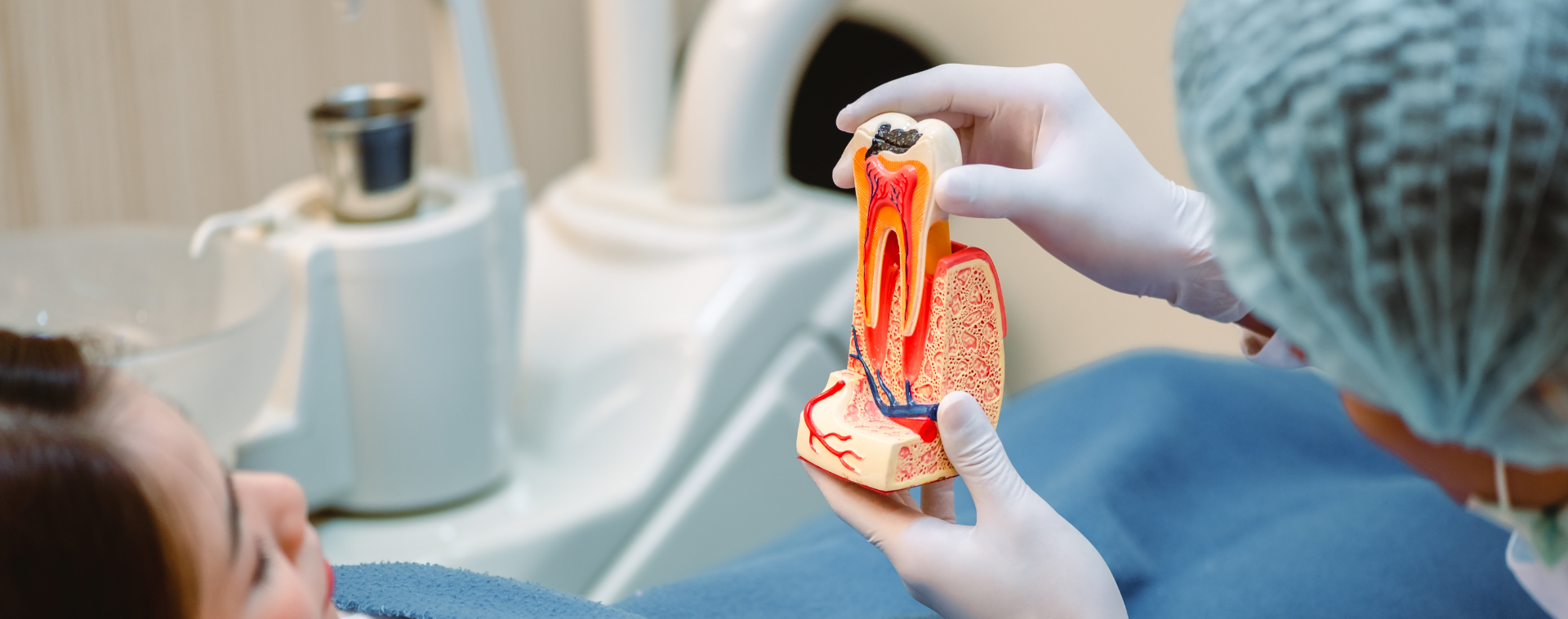
Inside teeth, all the way to the tip of the root, is a soft tissue called pulp which contains nerves and blood vessels. If a tooth is decayed or has had repeated dental treatment or fractures, bacteria can enter the root canal and cause the pulp to become infected or inflamed; an infected nerve may cause pain and can lead to abscesses.
The aim of root canal therapy is to prevent or eliminate disease within the tooth and surrounding bone by cleaning and disinfecting the root canals using files and antibacterial irrigation.
Sometimes an antiseptic dressing may be left inside the tooth for several days, and the root canals are then filled with a rubbery material called gutta-percha to prevent re-entry of bacteria into the canals.
Root canal therapy is carried out under local anaesthetic and is painless, although patients may suffer some sensitivity afterwards, which normally settles down in 12 to 24 hours and can be relieved with painkillers. Depending on the complexity of the case, treatment may be carried out in one to two sessions, with each session lasting between one and two hours.
Some factors affecting endodontic treatment can only be identified when the tooth is opened up; for instance a tooth may have a hairline crack but until the tooth is opened it is not possible to know the extent of the crack or whether root canal therapy is feasible or not.
After root canal therapy has been carried out, the tooth is weakened and more susceptible to fracture and we will therefore look at restorative work on the affected teeth immediately. Placement of a crown is recommended on back teeth as it covers the whole tooth, preventing it from splitting.
As with any medical procedure, root canal therapy may occasionally fail and studies have shown a success rate of approximately 90 per cent, with a four per cent chance of developing a mild abscess after treatment.
Failure may be due to a number of reasons, most commonly presence of bacteria in the root canals because the bacteria were inaccessible. Other reasons are the presence of accessory root canal anatomy such as extra canals, further fractures in the tooth, leaking of the filling or crown due to decay, bacteria on the outer aspect of the roots, and the presence of cysts.
If you are experiencing deep dental pain, arrange a consultation at Tewkesbury Dental to discuss whether root canal therapy can help.
Telephone 01684 295900 | Email us here


Excellent care. Sensible advice and a very caring team of people. Boss man is VERY understanding of your personal life and situation. Receptionist (sa... Read More
I've been a patient of lovely Mr R. for 30+ years. I find him very thorough and caring and feel fully confident in any treatment plans that become nec... Read More
This was my first visit to this practice. From the receptionist to the dental nurse and the dentist it was first class. Everything was explained even ... Read More
Amazing service, the dentist went extra mile as I needed ineroral scan to be sent over to me and they delivered everything on time. Highly recommended.
I’ve just completed a long course of treatment for a very troublesome tooth, and I can honestly say that Dr. Vrajesh Ruparelia is the most patient a... Read More